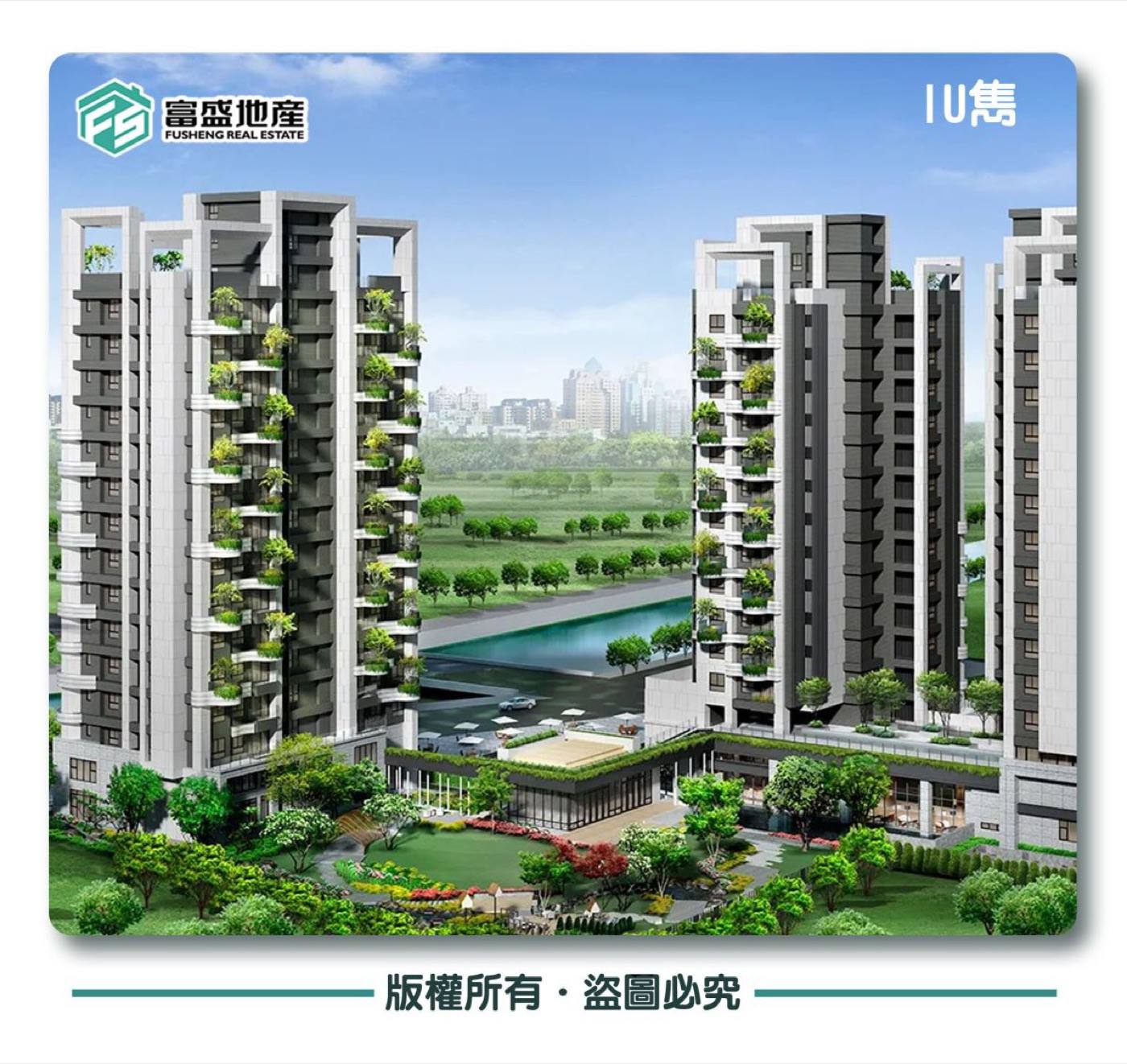
In presale marketing for Taichung, “damped” (制震宅) and “seismic-resistant” (耐震宅) have almost become standard labels. The short answer: any new building designed to the current code must already achieve “no damage in small quakes, repairable in moderate quakes, no collapse in major quakes”. Damping, base isolation and proprietary construction methods are extras, not the pass mark. Such homes are certainly buyable; the point is that every word in the advertisement must match a document.
Three numbers to remember: 3 approaches to earthquake design (resistant, damped, isolated); the first post-921 code revision on 29 December 1999 (ROC year 88); and a subsidy of NT$12,000 to NT$15,000 per building for a preliminary seismic assessment of older buildings, depending on total floor area. Based on Ministry of the Interior, Legislative Yuan and Taiwan Architecture and Building Center data (updated 2026-09-20).
Resistant, damped, isolated: what is the difference?
Seismic resistance relies on the beams and columns themselves. Damping adds dampers between floors to absorb earthquake energy. Base isolation places isolators at the base of the building to cut the ground motion off from the structure. They are three levels of approach, not three structural types.
| Item | Seismic-resistant (耐震) | Damped (制震) | Base-isolated (隔震) |
|---|---|---|---|
| Principle | Strengthen beams, columns and walls to take the force directly | Dampers between floors absorb energy | Isolators between foundation and superstructure reduce the force transmitted upward |
| Where installed | The whole structure | Between columns, inside walls or on braces, across several floors | Base of the building (foundation level or lower floors) |
| Effect | The basic capacity the code requires | Less sway and structural damage | The greatest reduction in sway; fittings and finishes less likely to be damaged |
| Cost and limits | Standard | Higher cost; effect depends on number, position and whether included in the design | Highest cost; needs maintenance space and clearance around the building |
Based on the National Applied Research Laboratories’ explanation of seismic principles (updated 2026-09-20). Structural types are covered in our RC, SRC and SC guide.
The seismic label: who issues it and how to check
The seismic label (耐震標章) is a third-party certification set up by the Taiwan Architecture and Building Center in ROC year 92 (2003) with a subsidy from the Ministry of the Interior’s Architecture and Building Research Institute. It has two stages, and the list of certified projects is searchable on the Center’s seismic label website.
- Seismic design label: verifies structural design quality at the design stage. Obtaining it in an urban renewal or dangerous-building rebuild earns a floor-area bonus, which is one reason developers apply.
- Seismic label: a designated supervision unit monitors construction quality on site continuously through to completion, and the label is issued on completion. What people call the “seismic construction label” is officially just the seismic label.
- How to check: open the “certified cases” list on the Center’s site (updated to end of August 2026) and match the name and number. If an advertisement says “seismic label obtained”, ask for the number.
- Note: civil engineer associations and other bodies also issue their own seismic labels. When you see one, ask which body issued it.
Estimating the standard from the permit date
Taiwan’s seismic code has included earthquake forces since ROC year 63 (1974), with important revisions in 1982, May 1997, December 1999 (after 921), July 2005, July 2011 and October 2022. Which version applies depends on the building permit date.
| Effective (ROC year) | Key change | What it means for buyers |
|---|---|---|
| Feb 1974 (63) | Building Technical Regulations first include earthquake forces, with strong, medium and weak zones | Earlier buildings have no seismic design requirement |
| Jun 1982 (71) | Seismic coefficients redefined, use factor added | |
| May 1997 (86) | Seismic design code established: 4 zones, vertical forces, soil liquefaction considered | |
| 29 Dec 1999 (88) | Post-921 revision of zone coefficients and response spectra; design force raised for Taichung-related zones | A permit after this date is the “post-921 standard” |
| Jul 2005 (94) | Micro-zoning, near-fault effects added, no collapse in major quakes, isolation and damping design rules | The dividing line for projects near faults |
| Jul 2011 (100) | Taipei basin micro-zones adjusted, isolation rules revised | Ground acceleration for Taichung largely unchanged |
| Oct 2022 (111) | Near-fault coefficients adjusted to the 2012 active fault map |
Based on Legislative Yuan Table 2-2 (Construction and Planning Agency data) and Ministry of the Interior legislative history (updated 2026-09-20). Read the date on the building permit (建造執照), not the occupancy permit or the completion date on the transcript, which can be two or three years later. See the viewing checklist for how to request documents, and the fault lines guide for the location side.
Older buildings: preliminary and detailed assessments and subsidies
Older resale homes can apply for a preliminary seismic assessment, subsidised at NT$12,000 to NT$15,000 per building. If the preliminary result raises concerns, a detailed assessment follows, with 30% of the fee subsidised up to NT$400,000. For fiscal year 115, Taichung’s Urban Development Bureau accepts applications from 23 April 2026 to 15 December, with quotas of 300 preliminary and 3 detailed assessments, limited to legal buildings where residential use is at least two-thirds of total floor area.
- Preliminary: an engineer inspects and measures on site and uses a scoring sheet to decide whether there is concern.
- Detailed: core sampling, rebar scanning and structural analysis; costly and slow.
- Who applies: the owner or the management committee. As a buyer, ask the owner whether a preliminary assessment has been done and whether you can see the report.
- There is also an “old home life extension” programme with repair subsidies for old apartments; details follow the Bureau’s announcements.
For an older property, also ask the bank about loan-to-value early; see debt ratio and your mortgage.
Our view: The most common seismic weakness in four- and five-storey walk-ups is a “soft storey” where the ground floor was opened up for a shop. Look at whether ground-floor walls or columns have been removed before you ask what year it was built.
Advertised as “damped”? Four things to verify
Check four things: how many dampers, on which floors and bays, which brand and model, and whether the structural calculations include them. “Damped” can mean two dampers or twenty.
- Number and position: ask for the damper layout drawing and compare it with the structural plan.
- Brand and model: the contract’s materials schedule must state them, not just “damping system”.
- Structural calculations: ask whether the dampers were included in the structural design. Some are merely attached and not counted.
- Third-party review: is there an external structural review or a seismic label? These documents can be requested at the offer documents stage, before paying earnest money.
The Alfa Safe method: what it is and how to confirm it
The Alfa Safe seismic system is a systematised rebar method promoted by structural engineer Tai Yun-fa’s team (Chung Li Building Systems). It concerns how rebar is fabricated and tied. It is not a damper and not a new structural type. The promoters say the stirrups are factory-bent from a single continuous bar as “system stirrups”, with an inner circular ring forming a “column within a column” double confinement, plus system walls and beams, and that it was tested by the National Center for Research on Earthquake Engineering and won a national invention gold medal. These are the promoters’ claims; this guide does not evaluate them.
To confirm a project uses it: check construction photos or the site for one-piece continuous stirrups and an inner circular ring, both visible to the eye; require the materials schedule to state the scope (all columns, some columns, walls) rather than just a logo; and check the project against the promoter’s public list of adopting projects. Any method only means the rebar is tied better. It does not replace design and supervision, so return to the label and damper checks above.
FAQ
Is a damped building always safer than a standard one?
Not necessarily. A building designed to the current code must already avoid collapse in a major quake. Damping is an extra whose effect depends on damper number, position and inclusion in the design. Read the documents, not the advertisement.
How do I check whether a project has a seismic label?
Search the “certified cases” list on the Taiwan Architecture and Building Center’s seismic label website. There are two stages, design label and seismic label. For labels issued by other bodies, ask who issued them.
Are pre-921 buildings always under-designed?
Not always, but the standard was lower. Only permits issued on or after 29 December 1999 follow the post-921 code. Earlier buildings can apply for a preliminary assessment.
How much is the assessment subsidy?
Preliminary: NT$12,000 to NT$15,000 per building. Detailed: 30% of the fee, up to NT$400,000. Taichung’s Urban Development Bureau accepts fiscal-year 115 applications until 15 December, with limited quotas.
Conclusion
Resistant, damped, isolated and method names are only the starting point. The check is complete when you hold the label number, the damper layout, the structural calculations and the permit date. If you do not know how to ask for these documents, contact us. See also the buying process.