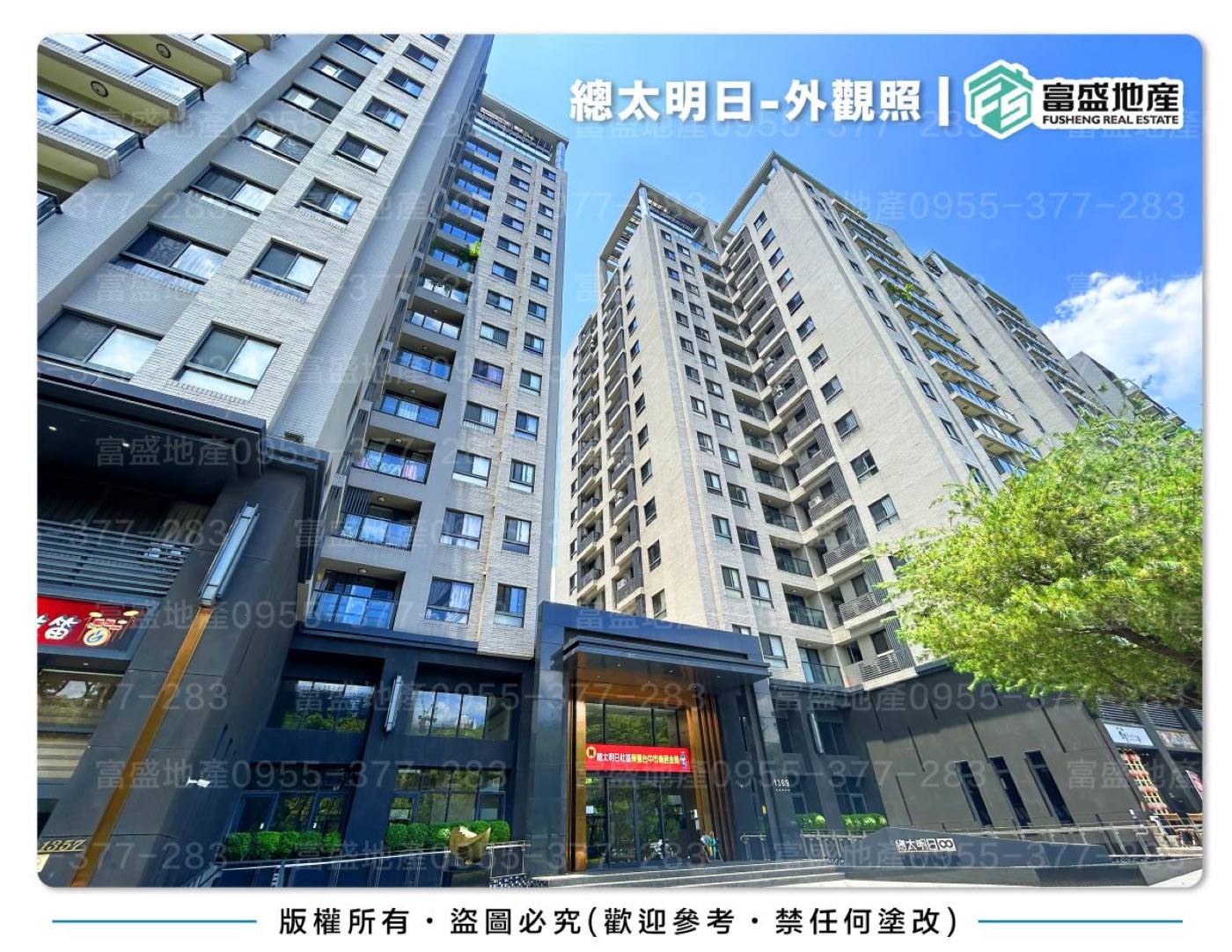
In Taichung’s redevelopment zones you will often find a 60-unit community on one side of the road and a development of over a thousand units on the other, at similar prices. Which is better? There is no absolute answer. It depends on whether you care most about the monthly management fee (管理費), the shared amenities, or simply peace and quiet. This guide lays out the eight differences, explains how communities are graded by size, who suits which, and the six things to check on a viewing. For how the common-area ratio is calculated, see our separate guide.
Three numbers to remember: 8 differences between the two types, 3 size grades used in the market, and 6 things to check. The grades are market convention, not a legal definition (data updated 2026-09-20).
First decide what you care about
More units means each home pays a smaller share of management costs and the community can afford a pool and gym. Fewer units means a quieter entrance and neighbours who know each other, but a higher fee per ping and basic amenities. Both are trade-offs.
- If you care about fixed monthly outgoings: a large community spreads the same security and cleaning staff over more homes, so each pays less.
- If you care whether you will actually use the amenities: only a large community can sustain a pool and gym, but if you do not use them you are paying for other people’s.
- If you care about privacy and simplicity: in a small community the lift is often just your own household; a large one has more comings and goings and usually a higher share of rental tenants.
Our view: One question is enough. How many times a month will I use the pool and gym? If the answer is rarely, an amenity-rich large community is a cost to you. If often, it is good value. This is a general reminder.
Large versus small: the comparison table
Of the eight items, large communities win on cost sharing, amenities and the number of comparable sales. Small communities win on simplicity, privacy and an easier management committee (管委會). The rest depends on how the community is run.
| Item | Small community | Large community |
|---|---|---|
| Management fee share | Higher per ping; staff costs split among few homes | Usually lower per ping; large base |
| Amenities and upkeep | Few amenities, simple upkeep, usually no pool | Many amenities; upkeep cost becomes the issue as the building ages |
| Management committee | Few people, easy to talk to, but easily dominated by a few | Institutional, often with a property management firm; many opinions, slow decisions |
| Who comes and goes | Simple; security knows the residents | Visitors, deliveries and tenants; relies on access control |
| Waiting for the lift | Lift-to-unit ratio usually good, short waits | Check the ratio; rush-hour waits possible |
| Resale liquidity | Few sales in the same community, harder to benchmark | Many registered transactions, transparent prices, more buyers |
| Repair fund | Small base; big repairs cost each home more | Builds up fast, but there are also more things to spend on |
| Privacy | Neighbours know each other, which cuts both ways | Anonymous, high privacy |
General comparison; actual experience depends on each community’s management quality (updated 2026-09-20).
How size is graded
The market convention is roughly: under 100 units is a small community, 100 to 300 is medium, and over 300 is a large community or “township-style” development (造鎮). This is custom, not law.
- Small (about 100 units or fewer): one or two blocks; amenities are mainly a lobby, mailboxes and a refuse room; some have no 24-hour security.
- Medium (about 100 to 300 units): most new projects fall here, with a property manager and basic amenities. It is the balance point between cost sharing and simplicity.
- Large (about 300 units or more): several blocks, often built in phases, rich amenities, management by system. Rental share and resident turnover are higher.
Who suits which
People who dislike noise, want to know their neighbours and have a fixed budget lean towards small communities. Families with children, frequent amenity users and people who want an easy resale lean towards medium or large ones.
- First-home families with young children: the playroom and reading room in a medium or large community get used, and the larger pool of buyers helps at resale.
- Retirees or people working from home: a small community is quiet and the lift is never busy, but confirm someone is actually managing security and lift maintenance.
- Buy-to-let investors: large communities have many tenants and committees used to renting, but you compete with many similar units for tenants at the same time.
- Tight budgets: the management fee is a fixed monthly cost. When you work out the monthly payment in our mortgage and debt-ratio guide, add the fee.
Six things to check on a viewing
Do not just ask “how many units?”. Check the total, the lift-to-unit ratio, the fee per ping, the reserve fund balance, committee minutes and the rental share.
| What to check | Where | What to look for |
|---|---|---|
| Total units | Occupancy permit, community rules, the agent | Does it include shops and parking? For phased developments, ask the total once all phases are complete |
| Lift-to-unit ratio | Count on site: units per floor, number of lifts | Two units per floor with one lift feels very different from eight units with two |
| Fee per ping | Committee notices, the agent | Charged on deed ping or interior ping? Is there a separate parking cleaning fee? |
| Reserve fund balance | Committee financial statements | In communities over 10 years old, a low balance means a big-repair levy may be coming |
| Committee minutes | Ask the seller or agent to obtain them from the committee | Recurring disputes about leaks, lifts, unpaid fees or lawsuits |
| Rental share | Ask the caretaker; look at mailboxes and lit windows at night | High rental share means more turnover and heavier amenity use |
Based on Articles 18 and 35 of the Condominium Administration Act (公寓大廈管理條例), updated 2026-09-20. By law, an interested party may request to read the reserve fund balance, financial statements and committee minutes, and the committee may not refuse. Buyers usually obtain them through the seller or the agent. For other inspection items see the viewing checklist. For a presale project you can only see the planned unit count; the differences are covered in resale versus presale versus new build.
Our view: A cheap management fee is not automatically good news. Ask first whether it is cheap because there are many units or because not enough staff are employed. A community with one guard per shift and cleaning twice a week looks very different from its neighbours after a few years. This is a general reminder.
What you will find in Taichung
Taichung’s redevelopment zones are dominated by medium-sized communities. Large phased developments sit mostly on the edges of those zones, while small single-block projects are common in the established urban areas. For the same budget, the redevelopment zones will mostly give you a medium or large community and the city centre a small one. This is a difference in product type, not in quality. See our area pages for the districts, and the buying process once you have decided.
FAQ
Is a large or small community better?
Neither in absolute terms. If you care about fees and amenities, choose large. If you care about simplicity and privacy, choose small. Most people find their balance in a medium-sized community.
How many units count as a large community?
Market convention: under 100 is small, 100 to 300 medium, over 300 large. The law does not define it.
Are fees always cheaper in a large community?
Usually lower per ping, but not always. A large community with many amenities and staff has high total costs too. Look at the amount per ping and the reserve fund balance.
Can I read the committee minutes before buying?
Yes. Article 35 of the Condominium Administration Act gives interested parties the right to read the minutes, reserve fund balance and financial statements. Buyers usually ask the seller or agent to request them.
Conclusion
The number of units is only an outcome. What you should really compare is the fee per ping, the reserve fund, the lift-to-unit ratio and the rental share. If you want to know which communities in Taichung meet your criteria, contact us.